
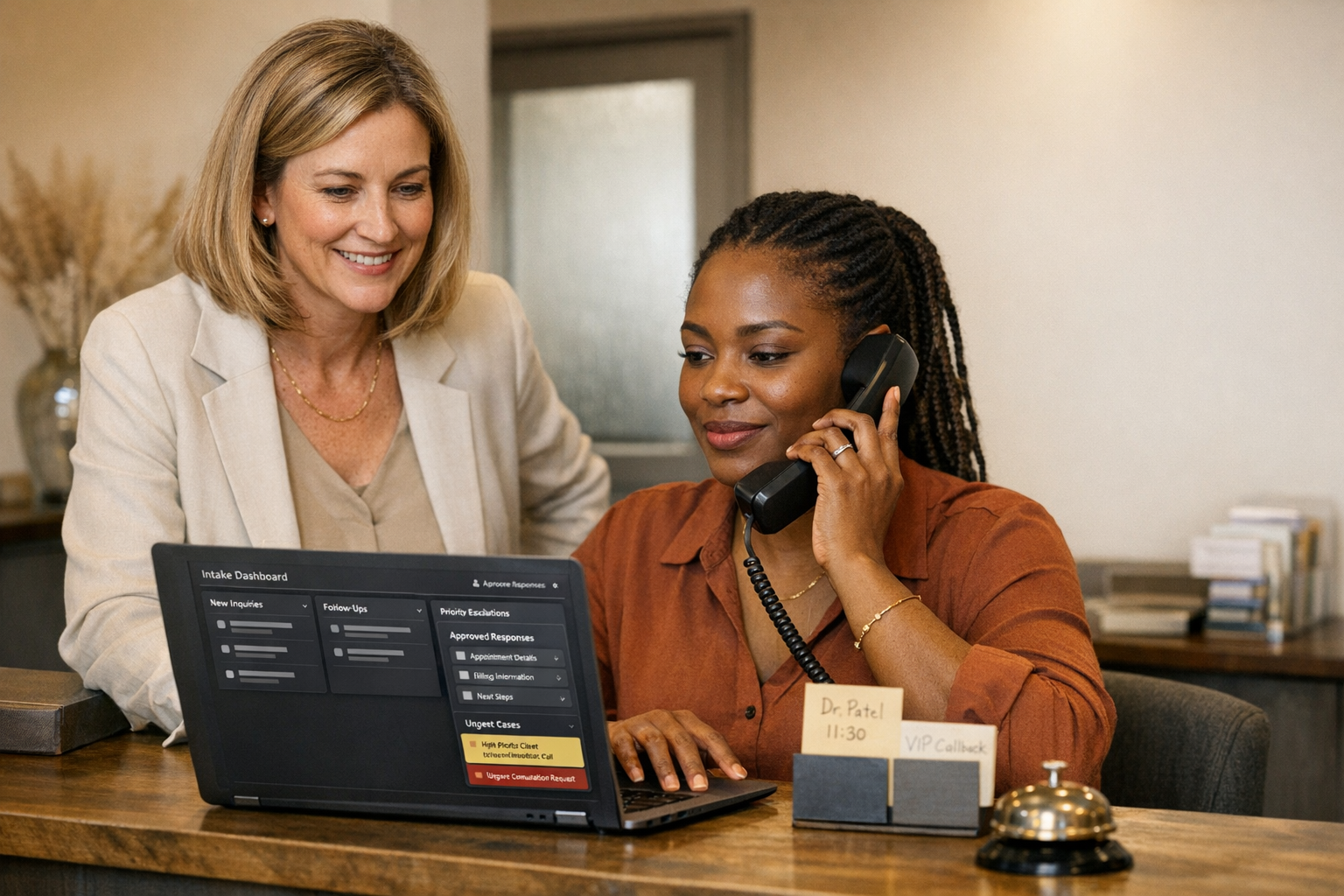
Hospitality businesses do not lose guests only because the room, table, venue, or experience is wrong. They lose guests because response time is too slow, information is inconsistent, or a simple enquiry lands while the team is busy serving people in front of them.
A traveller asks about availability after hours. A wedding enquiry needs package details. A guest wants to know about parking, check-in time, breakfast, pet rules, airport transfers, or load-shedding backup. A corporate client wants a quote. The team means to reply, but service work gets in the way.
An AI guest enquiry assistant can help South African hotels, guest houses, lodges, restaurants, venues, and tourism businesses respond faster while keeping humans in control of reputation-sensitive conversations.
The real problem is not enquiry volume
The issue is usually not that hospitality teams are lazy or careless. The issue is that enquiries arrive across too many channels while staff are already stretched.
Common channels include:
- website contact forms
- booking platform messages
- email enquiries
- WhatsApp messages
- Instagram and Facebook messages
- phone-call follow-ups
- event and conference requests
- repeat questions from confirmed guests
Each channel feels small on its own. Together, they create a constant interruption layer.
A managed AI receptionist for hospitality does not replace the warmth of the team. It protects the team from repetitive admin so they can give better service where human attention matters.
What an AI guest enquiry assistant can handle
The best first use case is simple: answer approved questions, collect the right information, and prepare the next step.
A practical AI guest enquiry assistant can help with:
- check-in and check-out questions
- parking, Wi-Fi, breakfast, and facility information
- pet, child, accessibility, and smoking policies
- venue or restaurant enquiry intake
- wedding, conference, or group booking information collection
- directions and local-area information
- cancellation and deposit policy explanations
- special-request routing
- late-arrival instructions
- quote-request preparation for staff
The assistant should use approved source material, not guess. If the answer is not in the company brain, it should ask a human or escalate.
Why South African hospitality needs a controlled setup
South African hospitality has real operational complexity. Load-shedding policies, seasonal demand, event traffic, local tourism patterns, foreign guest questions, payment concerns, security questions, and last-minute travel changes all affect the guest experience.
That means the AI employee must be configured around the actual business, not a generic hospitality script.
It needs to know:
- exact room, venue, restaurant, or service details
- current approved policies
- how bookings are confirmed
- which questions require staff approval
- what information may be shared publicly
- who handles complaints or urgent issues
- what tone fits the brand
- how to escalate after-hours requests
This is why BizSage positions this as a managed AI employee, not a once-off chatbot. The assistant needs ongoing updates as policies, prices, packages, and operations change.
A safe workflow for guest enquiries
A good starting workflow looks like this:
- The guest sends an enquiry through the website, email, WhatsApp, or another approved channel.
- The AI assistant identifies the enquiry type and collects missing details.
- It answers approved FAQ-style questions from the company brain.
- It prepares a reply or internal summary for staff review when needed.
- It escalates sensitive, urgent, complaint, payment, or availability questions.
- It records useful context so the team can follow up properly.
- It sends the owner or manager a summary of open enquiries and stuck items.
That workflow improves speed without handing the keys of the business to software.
Where human approval matters
Hospitality is relationship-heavy. A wrong answer can damage trust, create a booking dispute, or embarrass the business.
Human approval should stay in place for:
- final booking confirmations
- availability and room allocation decisions
- pricing exceptions and discounts
- refunds, cancellations, and disputes
- guest complaints
- safety or security questions
- medical, accessibility, or high-risk requests
- VIP, wedding, or corporate group enquiries
The AI employee can gather the facts and draft the response. The human decides when the answer carries commercial or reputational risk.
What this looks like in a guest house or lodge
For a guest house or lodge, the assistant might answer common questions about check-in, breakfast, Wi-Fi, parking, nearby attractions, and house rules.
When a potential guest asks about availability, the AI assistant can collect dates, number of guests, room preferences, contact details, and any special requirements. It can then prepare the enquiry for the team to confirm.
For a lodge, it can also explain approved information about activities, transfers, meals, child policies, and local travel considerations.
The owner does not need another inbox to watch. The owner needs fewer loose enquiries and clearer follow-up.
What this looks like for venues and restaurants
For venues, the assistant can collect event type, date, guest count, budget range, catering needs, setup requirements, and contact details before staff spend time on a quote.
For restaurants, it can answer approved questions about opening hours, directions, private functions, dietary options, booking policies, and special requests.
This supports the hospitality businesses page because the value is not AI novelty. The value is operational consistency: faster responses, fewer missed enquiries, and clearer handoffs.
The company brain is the difference
The assistant is only as good as the business context behind it.
A useful hospitality AI employee needs a maintained knowledge layer with:
- approved FAQs
- packages and policies
- tone examples
- escalation rules
- staff roles
- response templates
- seasonal notes
- common guest objections
- service standards
That company brain should improve over time. If guests keep asking the same question, the answer should become clearer. If staff keep correcting the assistant, the source material should improve. If a policy changes, the assistant should be updated.
This is the managed part of managed AI employees.
What to avoid
Do not start by launching a public-facing bot that can answer anything.
Avoid:
- letting the AI invent availability or prices
- giving generic answers that do not match the actual property
- hiding the escalation path from guests
- using outdated policy documents
- sending complaint replies without review
- adding another tool the team has to babysit
- measuring success only by number of AI responses
The better metric is operational relief: fewer missed enquiries, faster first response, cleaner information collection, and better staff follow-through.
When this is worth implementing
An AI guest enquiry assistant is worth considering when the business has enough enquiry repetition to justify a managed workflow.
Strong signs include:
- staff answer the same guest questions every week
- after-hours enquiries wait too long
- event or group enquiries arrive incomplete
- owners chase staff for enquiry updates
- guests ask across multiple channels
- follow-up depends on memory
- managers lack a clear daily enquiry view
If there are only a handful of enquiries per month, the business may not need a dedicated AI employee yet. If enquiries are regular and response speed affects revenue, this becomes a serious opportunity.
Start with an AI Opportunity Audit
The right first step is not to buy a generic chatbot. The right first step is to map the enquiry journey and decide where AI can safely create capacity.
A BizSage AI Opportunity Audit reviews the guest enquiry workflow, channels, repeated questions, escalation rules, staff handoffs, and revenue impact. From there, BizSage can design a managed AI guest enquiry assistant that fits the actual business.
If your hospitality business is losing time to repeated questions, slow replies, or messy enquiry handoffs, audit the workflow before another guest slips through the cracks.
FAQ
What does an AI guest enquiry assistant do?
It answers approved guest questions, collects missing details, prepares reply drafts, routes special requests, and alerts staff when a human needs to respond.
Can it work with WhatsApp, email, or website forms?
Yes, depending on the business systems and approval rules. BizSage starts by mapping the current channels, then designs the safest integration path.
Will it replace hospitality staff?
No. The useful role is to reduce repetitive enquiry admin so staff can focus on guest experience, service recovery, relationship building, and on-site operations.
FAQs
What does an AI guest enquiry assistant do?
An AI guest enquiry assistant helps answer approved guest questions, collect booking details, route special requests, prepare replies, and alert staff when a human needs to step in.
Can hospitality businesses use AI without sounding impersonal?
Yes, if the assistant is trained on the business's approved tone, policies, room or venue details, and escalation rules. The goal is faster service, not robotic service.
Should an AI assistant confirm bookings automatically?
Not at first. For most hospitality businesses, the safer starting point is draft replies, collect information, and escalate availability, pricing, payment, complaint, or exception cases to staff.